Monday, 4 March 2013

Catching The Night Train


Sitting here
On the night train,
Rushing and hushing through the dark,
And leaving you behind.
Raindrops, like tribal markings,
Obscure my view
Upon the dark glass on which I sigh.
An apricot dawn breaks and
Embraces the horizon.
You lied
When you said I was your beginning
And your ending.
I made you the owner of my heart
As you held my hand in yours.
But time spelt out the truth
And you were careless with my gift;
My love.
The sun rises, bringing clarity
To sight and thoughts.
Gazing at the passing trees, with leaves
Waving like Tibetan prayer flags,
I understand.
I only leant you my heart,
It’s not yours to keep.


Angela Barton

Saturday, 9 February 2013

Me Before You by Jojo Moyes


Me Before You is a story about Louisa Clark, a bright young woman who is growing bored of her fitness-obsessed boyfriend and is fed up when the café in which she's worked for years, closes down. Reluctantly she accepts a temporary six month post as a carer to a young man who has been left in a quadriplegic state following a road accident two years earlier. It was either that, or work at a local chicken factory!

Will Traynor used to have an exciting well paid job, buying and selling businesses. He’s travelled the world, skiing, parachuting, diving and climbing. In the blink of an eye, his life was turned up-side down one morning as he crossed the road to hail a taxi. Will is bitter and angry, especially when his glamorous girlfriend moves on and dates a mutual friend of theirs. His family are at the end of their tether and shortly after Louisa is taken on as his carer, she hatches a desperate plan to try to convince Will that his life is worth living.

This storyline may sound a bit grim and depressing - I thought the same when I read the blurb, but I’m so pleased I overlooked my initial misgivings. Jojo Moyes writes with sensitivity and humour. She tackles the subject of quadriplegia and the rights of disabled people with great perception and compassion. The descriptions of Will's day to day existence which involves relying on others for almost every aspect of his personal care, was written with warmth and understanding.

Jojo Moyes has written a novel which has left me emotionally exhausted, inspired and incredibly impressed. Me Before You gripped me like a spiny teasel clings to clothing. I resented being drawn away from the story by household chores and the necessity of sleep and work. I frowned at the dogs as I sensed the hues outside the window become darker because a dog walk would tear me from Will and Lou. It took three days to finish Me Before You due to daily commitments, but even at work or trudging around the village green, with my spaniels, the story never left my thoughts. I found myself grinning inanely at a page one minute and wiping tears from my cheeks the next. It was an emotional, uplifting, life-affirming read. I became emotionally involved with the characters and in the storyline.

Jojo Moyes has written a book which will stay with me for a long time.


Monday, 7 January 2013

Take Note


Happy New Year

Now that the last mince pie has been eaten and we're trying to squeeze all that extra re-cycling into the bursting wheelie bin, it's time for getting into that writing routine again. Some of you will have my unstinting admiration for having written every day throughout the festivities, but although I've snatched the odd twenty minutes to read, I've not written - and I've missed it sorely! It was only when a friend asked me how much I'd managed to write over Christmas, that I realised I hadn't followed one of the basic rules I'd learnt when I first started out as a writer. That is to write every day.

We all have to start somewhere when we decide to become a writer. We're not born with the know-how so we must search for it. I'm fairly new to writing, having woken up one morning seven years ago with the idea for a book. I love deciding the fate of my characters and knowing it's me who can save them. They become my friends as if they were real people and I care what happens to them. It's me who can help them out of their difficulties and lead them to an achievement or to someone special. If I were to have one regret in life, it'd be that I didn't discover my passion earlier.

So back to some basic rules, or should I call them helpful hints? I've tried to learn as much as I can about writing techniques through reading 'how to' books, searching the internet, attending workshops and master classes, buying monthly writing magazines, joining a writing group and of course, reading other people's books. There are always a handful of tips which I read time and time again which I thought I'd highlight to all new writers.

Writing can be a lonely pastime. Develop a circle of writer-friends who can encourage you when you're struggling and celebrate with you when you're on a roll. Whether it's a local writing group or joining twitter and facebook, a network of friends can be invaluable at those moments when you doubt your ability.

Read. Keep up with latest trends and developments or your writing could begin to sound dated. By reading, you see what's selling. By understanding market awareness, you could sway a commissioning editor's opinion in your favour.

Keep feeding your imagination. Go for a walk, visit a gallery, sit in a cafe and people-watch or visit somewhere for the first time. Don't just see the day - smell it, listen to it and touch it. Look for inspiration and stock up on creative ideas.

Find time to write every day. Modern life pulls us in all directions but if we truly want to become a successful writer, we need to give ourselves time. Whether you're an early bird or a night owl, find a time that suits you and your family and make it your writing time. Forget the pile of ironing. If one thing is certain - it'll still be there waiting for you after you've finished a chapter! John Braine wrote Room At The Top from his hospital bed on a busy ward so unless both arms are in a sling, even 100 words will keep the grey cells working and the fingers flexible on those keys!

Keep a notebook and pen to hand. How many times have you thought of a perfect sentence, book title, idea or name whilst driving or lying in bed, only to later rack your brain for the forgotten information?

If you have any tips which help you and you'd like to share them, I'm all ears!! I hope you all find writing success in 2013.


Saturday, 1 December 2012

What's In A Name?

I'm excited! My second book is with my agent and I'm preparing the outline of my third novel. I've notebooks, magazines, books, newspaper cuttings and a million scraps of paper with scribblings on them in piles on my desk. My next novel is going to be set in two eras. An object will be gifted to a governess in the late 19th Century and this object will play an important part in someone's life over a hundred years later. I've only written short historical stories so far so I'm really looking forward to the challenge of getting to work.

Before I started organising my notes, I needed to choose names for my characters which were believable, strong and of the correct era. Using the right names of the period can add authenticity to a story. Whether you call your character Sky or Autumn, born in the flower-power 60's, or Hashtag (yes, seriously) in 2012, their names will influence the characters themselves. Would you call your handsome hero Nigel? (sorry Nigels) Seriously, Nigel and Juliet really doesn't work!

I've had great fun searching through Victorian forenames and surnames. Many names were taken from the politicians, religious leaders and celebrated military heroes of the time, such as William, Victoria and George. Girls were also given virtuous names such as Hope or Charity but it wasn't uncommon for mothers to give their daughters their maiden name as a second given name, such as Louisa Jennings Jones. Readers automatically associate names with people they know; names which have stereotypes attached to them. Kylie would conjure up a petite Australian singer, whereas Russell would create an image of a long-haired comedian. Best to avoid these where possible.

What do you think of the names I've chosen for my characters? I'd really appreciate feedback and would change them if you think one didn't suit. My 19th Century governess and protagonist is called Esther Jefferson, daughter of Dr Charles Jefferson. The groom and love interest is called Silas Dredge and Esther's friend, the cook's help, is called Hetty Mallory. Esther goes to work for Mrs Elspeth Fortesque to teach the children, George and Mary.

There have been some amazing names given to fictional characters over the years. Names which conjure up a different time, fear, longing, hatred and desire. For a bit of fun, here are my personal top five. I'd love to hear what your top five would be.

5. In fifth place is Abel Magwitch. A perfect name for a fugitive who'd escaped from a prison ship in Great Expectations.


4. Bathsheba Everdene comes in fourth. An strong woman who doesn't want to give up her independence, even for love, in Far From The Madding Crowd.


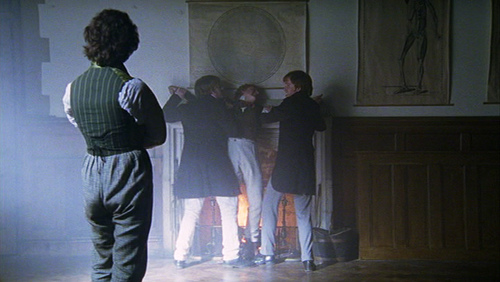
3. Coming in third is Flashman. I remember watching Tom Brown's School Days as a child and Flashman was such an intimidating bully of a character. I clearly remember the scene where Flashman ordered his 'friends' to hold Tom against an open fire.


2. And the runner up is Gabriel Oak. What an amazing character name for the kind young shepherd in Far From The Madding Crown and the future love of Bathsheba. Hardy came up trumps with two great fictional names!


1. First place goes to the incredibly sexy Rupert Campbell-Black. I can almost smell the sweet grass on his jodhpurs and the earthy scent from his boots as he strides into the hall to sweep me off my feet and..... Okay. You get the idea. He isn't called Nigel!!


Sunday, 18 November 2012

Skimming Stones


Surely only a handful of summers have passed
Since I jumped the white chalked squares
On the shiny black slugs of melting tarmac?
Long halcyon days filled with playgrounds and parks
In which hung a shimmering heat-haze
Which levitated above the hot speckled concrete.
Holidays of sipping iced-lemonade, with skin tinged pink
From the rays which danced in the palest of blues.
Surely only a small bouquet of nights have passed,
Each nocturnal hour filled with soft scents of blossom,
Since I read of the Famous Five by the landing's pale glow.

And now my reflection is patterned with lines of middle age.
How did I sink like a painted pebble into these murkey depths?
Did I skim that stone before it sank?
Polish it against my hip before hurling it
Seawards; to bounce and pirouette upon the surface?
And why does my mother's face look back from the mirror?
Is it a trick of the light? Her tired eyes, her lips,
Puckered with a life of coversation.
A private prank played on me by shadows, as
The poised pencil which draws the circle of life,
Rises, tick by slow tock, to meet its starting point.

By Angela Barton

Saturday, 3 November 2012

Making The Cut Less Painful


It's been a while since I've visited my blog because I've been editing my novel at every opportunity I can find. In August I sent my completed manuscript of 104,500 words to my agent and having read it, she suggested several helpful ideas; such as moving some chapters around, making it obvious that one of my characters was 'in' on the secret and also making another character more unstable without turning them into a psychotic caricature of a mad stalker! The trouble is, the characters make appearances throughout my novel so it's been a slow process to change dialogue and emotions without missing a crucial scene and confusing the reader.

I've also renamed my book, The Bandstand. The bandstand in question is in Clapham Common, London, and plays a part in several chapters of my book. I felt as if my original title - In Hindsight, gave too much away - protagonist looks back and wonders why she hadn't noticed....

So I thought that for this post I'd talk about editing. There's a huge amount of global competition when it comes to writing, so the sharper our manuscript is, the less likely we are to be over-looked. If we take time to learn how to edit effectively, the improvement can be profound. Every tweak and cut polishes our chapters. Even after we've read and re-read our work numerous times, the odd tpyo (see what I did there?) slips through, which is why copy editors are in employment! Sometimes we are just too close to our work and need an objective eye to cast a glance over it.

But what can we do for ourselves?

If you can bear it, put your manuscript out of sight in a safe place for several weeks or even months. When you come back to it, all sorts of mistakes will become apparent. Spelling, grammar, sentences that don't flow, speech marks in the wrong place, missing words, fluffy/wordy descriptions and paragraphs of information which waffle on and become tedious. The reader wants to be able to flow through your story seamlessly without becoming irritated by little flaws.

Personally I find the most effective way to edit is to print out a hard copy of my novel. I'll sit with a red pen and start to read. It's quite unbelievable how many red squiggles and lines will decorate my pages afterwards, even when I think I've done a good job editing on my computer. Also reading the printed pages out loud will make it obvious if I'm stumbling with the rhythm of my sentences.

Cut out repeated words, dull or superfluous detail, any overuse of adjectives and adverbs and all weak words like 'but' 'quite' and 'rather.' I use 'that' and 'just' too often and I just have to keep an eye out for them.

Look out for occasions when you've stated the blindingly obvious: 'He shouted loudly,' or 'she whispered quietly.' Don't rely on spell check. The misuse of it's and its or there and their won't be highlighted as a mistake. Some authors prefer to edit one aspect of their work at a time, for example, punctuation, spelling or deleting unnecessary information. Personally I opt for doing an overall edit as I'm reading.

Whichever way you decide, try to be ruthless.

Thursday, 13 September 2012

Dusk in Afghanistan


He looks for beauty in this brutal game
Amongst the bitter dust of Helmand,
And finds it in the sun’s splendour;
Its amber rays caressing the mountain range
As army boots leave prints in the earth,
As barren as unanswered wishes.
He finds no flower to press against his face and smell
Memories of his wife’s perfume.
Waning daylight cling to rocks,
Holding back the invading night
Where silent terror lurks unseen.
And evil crouches, exhaling poison as it waits
Minute
By
Slow
Minute.
Squabbling insects dance and torment,
Biting and sucking his pink-parched skin.
He thinks of England’s gentle rain
Dimpling puddles under pewter skies,
And sighs.
Dusk creeps onwards darkening his thoughts,
As the Reaper hides nearby,
Planning a repulsive requiem,
Whilst searching for the next soul
To steal from loved-ones across the sea,
So
Many
Miles
Away.
The soldier wipes his furrowed brow
Wrinkled like the wind-blown dunes.
Eyes raised, he looks into the navy sky;
A shared constellation with home.
Moving onwards
Past peripheral shadows of outcrops,
Like broken teeth in a rotting mouth.
Tears roll down the hardest face each silent night
In this foreign land, where each man dreams
Of going home.

By Angela Barton